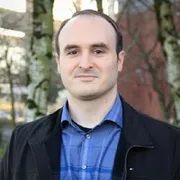
Technical leadership for the agentic software organization.
I’m a technical leader focused on how large engineering organizations adopt agentic software development.
My work spans hands-on system design and implementation through company-scale technical strategy: what should be standardized, where platform abstractions belong, how reliability is measured, how autonomy is governed, and how engineering organizations evolve as agents take on more of the software lifecycle.
At Netflix, my title is Staff Engineer. I was a founding member of the platform modernization team and work on production systems spanning autonomous code change, agent execution, deterministic validation and remediation, runtime infrastructure, observability, model access, policy, and developer productivity.
I remain close to implementation because the strategy only matters if it survives production. The goal is practical: give engineers more leverage while making increasingly autonomous systems legible, reliable, and safe to operate.
I’m optimistic about what AI can do because I don’t treat it as magic. I treat it as an engineering system—something we can measure, constrain, validate, observe, and improve.
From system details to organization-wide direction
The work is technical IC leadership: making the important architectural choices, building the shared systems, and helping teams adopt them.
Technical direction
Defining the architecture, platform boundaries, standards, and reference systems that allow agentic development to scale beyond individual teams.
Autonomous software engineering
Designing the lifecycle around agent work: intent, execution, deterministic validation, remediation, review, deployment, observation, and learning.
Enterprise platform systems
Building the substrate for safe autonomy: identity, policy, secure runtime, model access, tool governance, telemetry, evaluation, cost, and auditability.
Organizational capability
Turning complex engineering change into reusable platform capability so adoption compounds instead of depending on a small group of specialists.
Working principles
How I approach technical change
Start with the operating model
A capability is not production-ready because the core technology works. It needs ownership, observable behavior, failure handling, incentives, and a path for teams to use it well.
Build constraints into the platform
The best guardrails are usable defaults. Platform-level identity, policy, runtime boundaries, and measurement make safe behavior easier than workarounds.
Measure outcomes, not activity
Usage, tokens, and task counts are inputs. The engineering signals that matter are validated outcomes, reliability, recovery, cost per successful result, and the time teams regain.
Outside the core work
I also write about software systems, brain-inspired AGI, economics, and speculative fiction. I am the author of Rebel Hearts Alien Skies, and live in Las Vegas with my wife Caitlin, our three kids, a German Wirehaired Pointer, and an Australian Cattle Dog.
Get in touch
Open to conversations about agentic software engineering, technical architecture, enterprise platform strategy, autonomous systems, and engineering productivity.